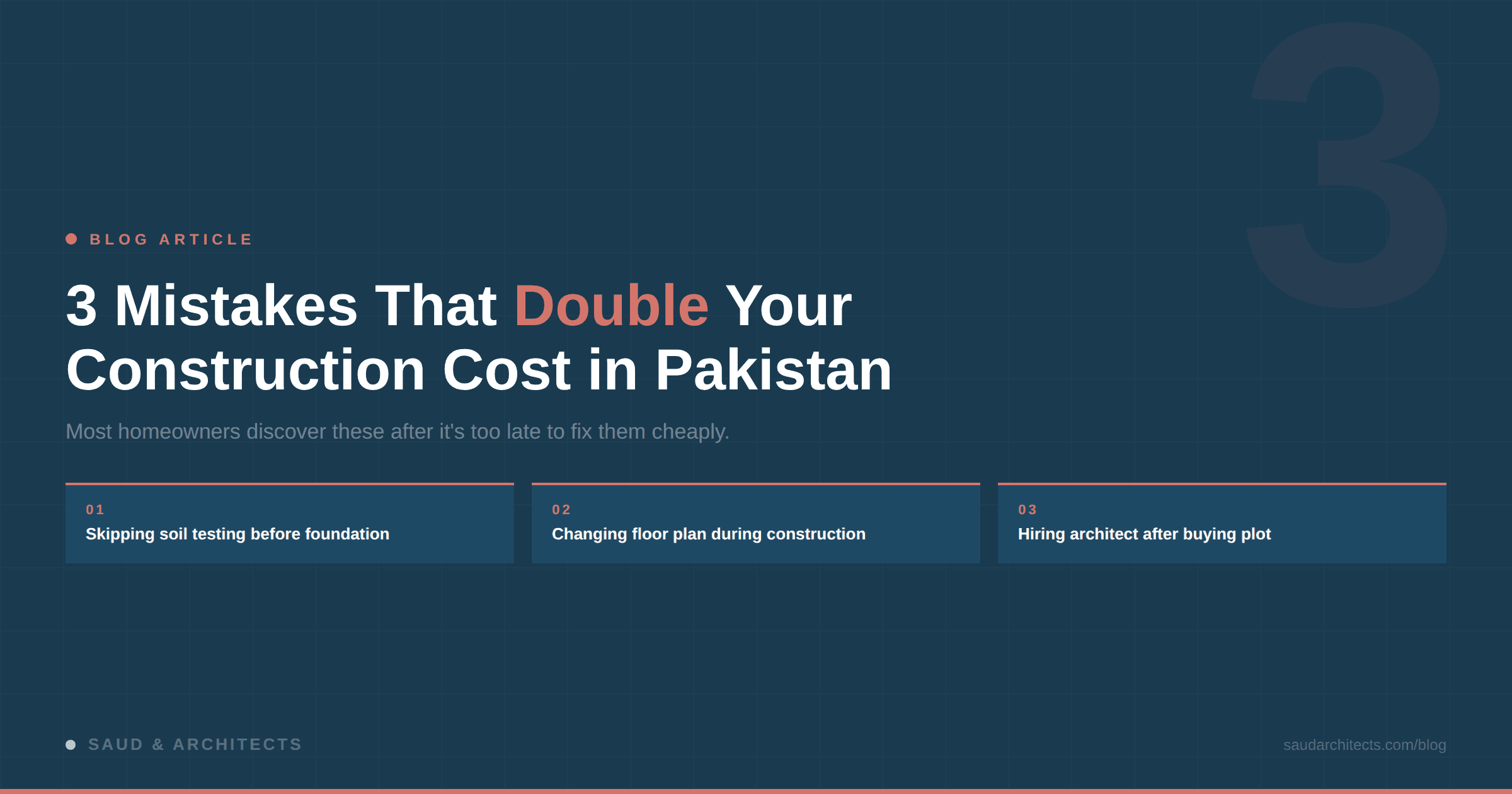
3 Construction Mistakes That Double Your Building Cost in Pakistan
Apr 19, 2026
There is a pattern we see repeatedly across residential construction projects in Pakistan. A homeowner begins with a clear budget. They hire a contractor, approve a design, and break ground. Six months later, the budget has doubled — and the house is only half finished.
The causes are almost always the same. Not bad luck. Not inflation. Not dishonest contractors, though that happens too. The real cost overruns come from three decisions made — or not made — before construction even starts.
At Saud & Architects, we have worked on over 700 projects across Lahore, Karachi, Islamabad, and beyond. The most expensive problems we encounter are the ones that could have been prevented in the first two weeks of the design process.
Mistake 1: Skipping Soil Testing Before Foundation Design
This is the most common and most expensive shortcut in Pakistani residential construction.
A geotechnical soil test costs approximately PKR 20,000 to 30,000 depending on the location and depth required. It tells your structural engineer exactly what kind of soil your foundation will sit on — its bearing capacity, water table depth, and settlement characteristics.
Without this information, your engineer is guessing. They will likely overdesign the foundation to be safe, which means you pay for more concrete, more steel, and more excavation than you may actually need. Or worse, they underdesign it, and you discover cracks in your walls two years after moving in.
In areas across Lahore such as parts of DHA Phase 6, Bahria Town, and several societies along Raiwind Road, soil conditions vary significantly even between adjacent plots. What worked for your neighbour's foundation may not work for yours.
The cost of a soil test is a fraction of one percent of your total construction budget. The cost of a foundation failure can run into PKR 20 to 30 lakh in remedial work — if it can be remedied at all.
Every project we take on at Saud & Architects begins with a soil investigation. It is not optional. It is the first line item in the project plan.
Mistake 2: Changing the Floor Plan During Construction
This is where most budgets collapse.
The design phase exists for a reason. It is the time to decide where every wall goes, where every door opens, how the plumbing routes, and where the electrical panels sit. These decisions are cheap to change on paper. They are extraordinarily expensive to change once concrete has been poured.
A common scenario: the homeowner approves the floor plan. Construction begins. Three weeks into foundation work, they decide the kitchen should be larger, or a bedroom should be added, or the staircase should move to the other side of the house.
Each of these changes triggers a cascade. Structural drawings need revision. Plumbing and electrical routing changes. The contractor submits revised quotations. Materials already purchased may become waste. The timeline extends by weeks or months.
In our experience, every significant mid-construction change costs three to five times more than the same change would have cost during the design phase. A wall relocation that costs PKR 15,000 to change in architectural drawings can cost PKR 75,000 or more to change on site, accounting for demolition, re-routing of services, material waste, and labour downtime.
The solution is straightforward: invest more time in the design phase. Live with the floor plan on paper for two to three weeks before approving construction. Walk through it mentally. Imagine your daily routine — morning to night — in every room. Ask your architect to explain every decision. Raise concerns before the first brick is laid, not after.
At Saud & Architects, we do not rush the design approval process. Our clients receive detailed 3D walkthroughs and BIM models before construction begins, specifically so that changes happen on screen rather than on site.
Mistake 3: Hiring an Architect After Buying the Plot
Most people in Pakistan approach home construction in this sequence: buy a plot, then find an architect, then start designing. This sequence feels logical. It is also backwards.
The plot you buy determines what you can build on it. Not just in terms of area, but in terms of orientation, setback regulations, access points, drainage conditions, and soil characteristics. These factors directly shape the design — and the cost.
Consider orientation. A west-facing plot in Lahore will receive the most intense afternoon sun on its front facade. If your main living spaces face west with large windows, you will spend significantly more on cooling every summer for the life of the building. An architect involved before the purchase would have flagged this and either suggested a different plot or a design strategy that accounts for the orientation.
Consider setback rules. Housing societies across Pakistan have varying regulations about how far your building must sit from each boundary. A 10 marla plot in one society may give you 7 marla of buildable footprint after setbacks. In another society, the same plot size might yield 8 marla. This difference matters enormously when you are trying to fit four bedrooms and two living areas.
Consider soil and drainage. A corner plot may look attractive, but if it sits at a low point in the neighbourhood's drainage pattern, you may face water accumulation issues that require expensive waterproofing and raised foundation work. A plot on a slight elevation with good drainage could save you lakhs in foundation costs.
A 30-minute consultation with an architect before your plot purchase can reveal constraints that would otherwise take months and significant expense to work around after the fact.
The Common Thread
All three mistakes share a root cause: treating the design phase as a formality rather than the most critical stage of the project.
In Pakistan's construction culture, there is a tendency to rush from purchase to construction as quickly as possible. The design phase gets compressed. Soil testing gets skipped. Plot selection happens without professional input. And the result is buildings that cost more than they should, take longer than planned, and sometimes fail to meet the owner's actual needs.
Architecture is not a cost. It is an investment in getting everything else right the first time.
If you are planning a residential or commercial project anywhere in Pakistan, we offer free initial consultations to discuss your site, your goals, and how to avoid the mistakes that cost the most.
Book a free consultation: saudarchitects.com/contact
Saud & Architects is a Pakistan-based architecture and engineering firm with 44+ years of group legacy under the Bin Saud Group. We specialise in residential, commercial, and healthcare architecture across Lahore, Karachi, Islamabad, and Murree.